
Stellar Realities — Innovating Elegance
AR and VR Technologies
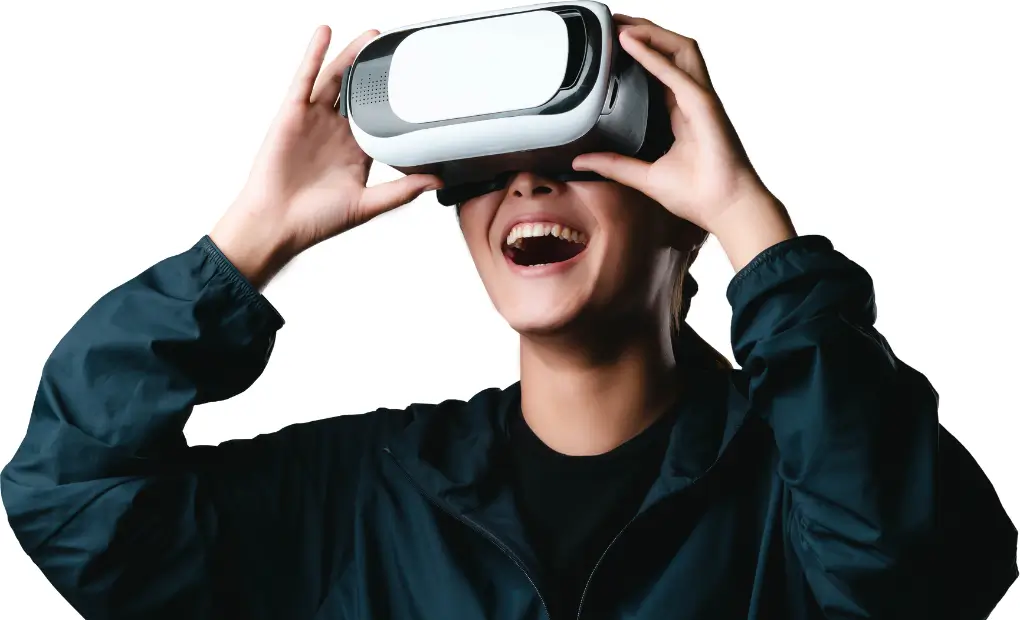
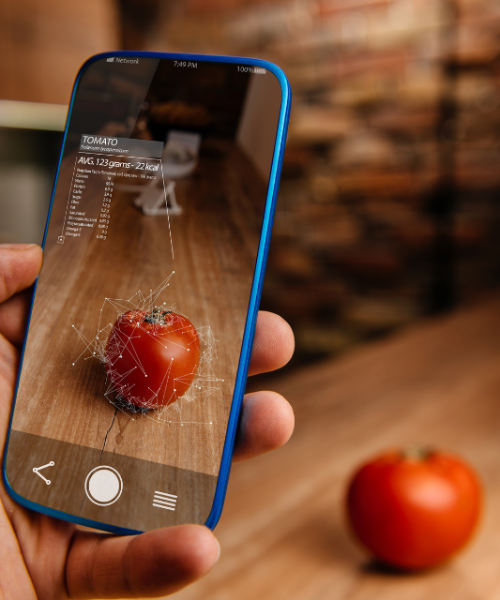
Augmented Reality (AR) seamlessly integrates digital content into the real world. Unlike Virtual Reality, which immerses the viewer in a completely artificial environment, AR overlays digital elements onto the viewer’s real-world surroundings.
You’ve likely encountered AR in everyday applications without even realizing it. Popular examples include Snapchat’s animated emojis, Instagram’s stickers and filters, and the widely known game Pokémon Go.
The image on the left showcases one of our recent AR projects for Selfridges in London. They featured a massive virtual artwork by Jon Emmony, suspended in their atrium. You can explore the project here.
We specialize in producing various types of AR experiences, including WebAR, app-based AR (for iOS and Android), and social AR such as Snaplenses and Spark AR.
Scroll down to learn more about the different types of AR we offer.
WebAR is augmented reality delivered through a web browser, eliminating the need for app installations. This streamlined access offers a quicker route to the AR experience, making it a popular choice among our clients. The leading platform for developing WebAR experiences is 8th Wall. In the ever-evolving landscape of browser-based experiences and mobile security features, 8th Wall consistently stays ahead, offering a feature set that increasingly rivals app-based AR. We are proud to be an official partner of 8th Wall, and you can visit our partner page here.
However, WebAR does have some limitations. It isn’t as proficient at detecting 3D objects and has constraints on advanced features like ‘occlusion’ (the ability to place AR objects behind other objects in the real world) and dynamically removing backgrounds in selfie-based experiences. Despite these limitations, the pace of development is impressive. We’re seeing continuous improvements in tracking, richer experiences, and enhanced sharing features. Recent advancements include sky replacement and world tracking using visual positioning from Niantic, which precisely anchors web content to physical locations.
This is an exciting space to watch, and the quality of WebAR experiences and the results we can achieve are rapidly advancing.
Social AR refers to augmented reality experiences available on major platforms such as Instagram and Facebook (via Spark AR), Snapchat (Snaplenses), and now TikTok. The key advantage of Social AR is the availability of powerful, built-in tools that enable the creation of advanced, fun, and impressive AR experiences with minimal effort and cost. Additionally, these experiences are easily shareable and typically pre-installed on the phones of the target demographic.
However, Social AR has a notable limitation: file size. Experiences are usually restricted to 4MB, necessitating simpler and often more abstract designs rather than highly detailed ones.
Our 3D modelers thrive on creatively pushing the boundaries of this medium. We excel at creating high-detail models with custom animations, adeptly working within file size constraints and finding innovative ways to maximize impact despite these limits.
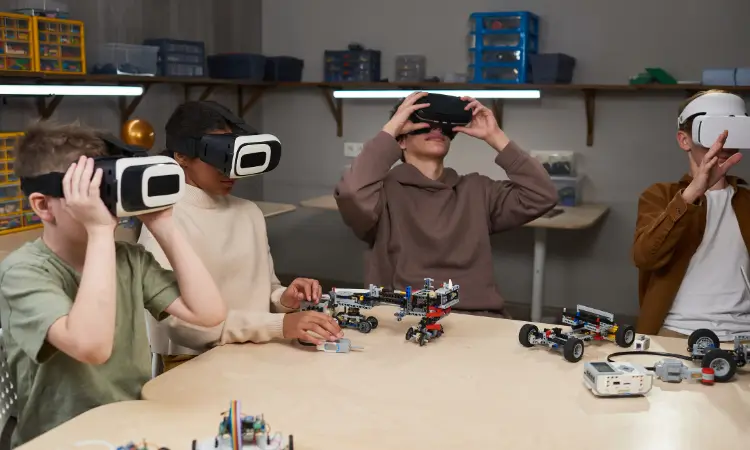
Mixed Reality (MR) is essentially augmented reality experienced through head-mounted or wearable devices. Definitions of MR vary, with some, like Microsoft, even using it to describe their VR headsets. However, it is increasingly associated with head-mounted devices that overlay digital content onto the real world.
There are two primary methods for achieving mixed reality. The first involves projecting content onto reflective lenses in front of the eyes, as seen with devices like the Magic Leap and Microsoft Hololens series. The second method, known as “digital pass-through,” allows users to see the real world through cameras mounted on the outside of the glasses, such as with the Meta Quest Pro. The Niantic example shown on the left illustrates the reflective lens approach.

App-based AR is the most powerful form of augmented reality, offering the full suite of advanced features, from Apple’s LiDAR scanners to occlusion mapping and high-end world tracking. These capabilities establish AR as a truly immersive technology. If you have an existing app or are looking to build one, this is where the most exciting AR features come into play. We have experience building apps from scratch, such as for Selfridges, and integrating our content and experiences into other clients’ apps, including BT Sport and Louis Vuitton. AR can be developed natively or using Unity.
If you’re interested in tapping into the future potential of AR experiences and maximizing the connection between digital and physical engagement, discussing the capabilities of app-based AR with us is a great place to start.
AR and VR Technologies
AR and VR Technologies